


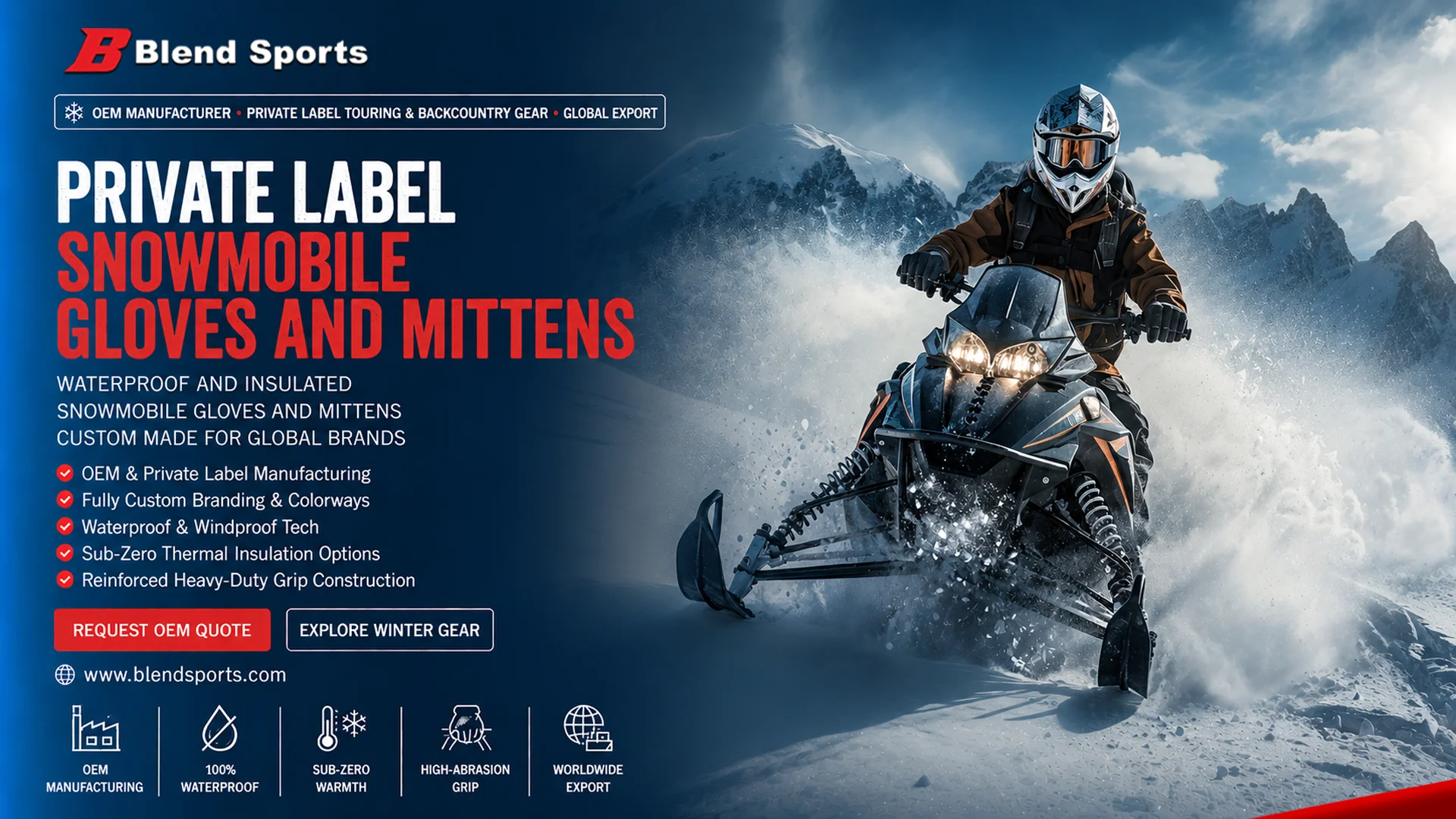
Snowmobile Glove Manufacturing Overview
Snowmobile riders face wind chill, high speeds, and prolonged exposure to snow, ice, and fuel, all of which exceed the protection offered by standard winter gloves.
Blend Sports produces private-label snowmobile gloves and mittens for demanding winter conditions. Programs can combine oil-resistant leather, wind-blocking membranes, activity-matched insulation, and reinforced gauntlet closures according to the approved technical specification.
Production planning supports pilot runs and seasonal orders while maintaining approved materials, measurements, tolerances, and branding requirements.
How Snowmobile Gloves Differ
Standard winter gloves do not offer the durability or performance needed for snowmobile riding, which involves wind, throttle use, and exposure to fuel.
Production follows approved specifications, including durable leather palms, wind-blocking shells, and reinforced wear zones, to support comfort and reduce common failure points during extended rides.
This foundation supports the technical details provided in the following sections.
Snowmobile Glove Categories
- Trail Riding Gloves: Commonly developed with 3M™ Thinsulate™ (100g–150g) insulation, wind-resistant shells, and slip-resistant leather palms for sustained throttle use.
- Backcountry & Mountain Gloves: Designed for varying activity levels with Hipora® breathable membranes, removable liners for temperature control, and moisture-wicking brushed tricot lining to manage temperature changes.
- Snowmobile Mittens & Hybrid Styles: Developed for extreme cold with PrimaLoft® Gold or similar high-loft insulation and extended gauntlet coverage for thermal retention.
The private-label program offers branded production and technical support, enabling brands to expand their snowmobile glove lines with Blend Sports’ manufacturing, material sourcing, and customization expertise.
How Snowmobile Riding Wears Out Gloves Differently
| Challenge | Ski/Snowboard Gloves | Snowmobile Gloves | Manufacturing Implication |
|---|---|---|---|
| Palm Stress | Intermittent grip (poles, bindings) | 4-6 hours sustained throttle pressure | Drum-dyed leather with silicone grip overlays for heated handlebar traction |
| Chemical Exposure | Minimal | Regular fuel, oil, brake fluid contact | Oil-resistant leather treatments and bonded nylon 6,6 thread to prevent seam failure from fuel and oil contact |
| Wind Chill | Lower speed exposure | High-speed sustained wind chill | Hipora® waterproof/breathable membrane and wind-blocking technical textile shells |
| Thermal Pattern | Moderate activity swings | Extreme stop-start (riding vs. idle) | Insulation weights matched to riding intensity, not temperature alone |
Snowmobiling creates unique wear patterns, chemical exposure, and thermal demands not present in other winter sports. Addressing these factors early in development helps brands avoid common failure points.
Snowmobile Glove Development & Process Control
Developing snowmobile gloves requires precise pattern grading, accurate panel alignment, and reinforced stitching in high-wear areas to ensure proper fit, comfort, and durability.
Pattern Development & Fit Control: Multi-panel glove designs optimize throttle grip comfort and natural hand movement. Pre-curved box-finger shapes align with handlebar grip angles to reduce fatigue.
Material Selection: Oil-resistant leather, technical textiles, windproof membranes, and thermal insulation are selected for snowmobile-specific performance.
Seam Integrity & Stitching: Bonded nylon 6,6 thread and controlled stitch density reinforce palm stress zones and flex points, ensuring durability under fuel exposure, vibration, and moisture.
Quality Control: Material checks, in-line inspections, and final pre-shipment audits ensure batch-to-batch consistency.
AQL 2.5 Inspection Protocol: The four-step quality control process includes material checks on arrival, in-process inspections, pre-shipment reviews, and a final AQL 2.5 audit.
Quality Management: Production controls are maintained within Blend Sports’ ISO 9001:2015 quality management framework.
Production Scaling: Volumes are planned from pilot runs to seasonal bulk orders. Production follows approved technical documentation, with no material substitutions or design changes without prior authorization.
Specifications by Riding Style
| Style | Insulation & Type | Membrane Priority | Key Features | Performance Focus |
|---|---|---|---|---|
| Trail / Recreational | 100g–150g 3M™ Thinsulate™ | Total wind-blocker barrier | Extended gauntlet and oil-resistant goat leather | Sustained high-speed wind protection |
| Mountain / Backcountry | Removable PrimaLoft® liner | High vapor transmission (Hipora®) | Articulated fingers; Kevlar® palm | Activity-level thermal adaptation |
| Performance / Racing | 80g–120g 3M™ Thinsulate™ | Maximum dexterity membrane | Accordion stretch; Silicone grip | Tactile throttle feedback |
Wind speed and riding intensity influence insulation needs as much as temperature. Apply segment-specific benchmarks during sampling to ensure gloves meet rider requirements before production approval.
Material & Insulation Options
| Component | Standard Option | Higher-Spec Option | Performance Difference | Application |
|---|---|---|---|---|
| Palm Leather | Goat leather | Durable cowhide | Natural cold-weather flexibility; Superior handlebar feedback | Precision throttle control across all riding styles |
| Membrane | 20K TPU waterproof | Hipora® breathable membrane | Windproof barrier with high vapor transmission | Critical for high-speed trail riding |
| Insulation | Generic polyester fill | 3M™ Thinsulate™ (Type G) | Improved warmth-to-weight ratio without bulk | Common in performance-focused private-label programs |
| Gauntlet | Standard 4" cuff | Extended 6" with shock-cord snow skirt | Triple-layer wind/snow barrier | Essential for backcountry and deep powder riding |
Snowmobile Glove Design Considerations
Palm Design for Throttle Control
- Sustained throttle use requires specialized tanning to maintain leather flexibility under pressure and in sub-zero temperatures.
- Oil-Resistant Treatment: Specialized tanning provides inherent protection against fuel, oil, and brake fluid.
- Strategic Reinforcements: Double-layered palm centers and reinforced thumb-to-index webs with Kevlar® stitching in high-stress zones.
- Accordion Stretch Inserts: Flexible leather or textile segments on fingers allow ergonomic movement and reduce hand fatigue.
Material Considerations: Specialized leather tanning preserves structure and grip better than conventional methods when exposed to petroleum and sub-zero temperatures. Core performance relies on tanning rather than surface treatment.
Extended Gauntlet Design
High-speed riding creates wind-penetration challenges that standard gauntlet designs cannot solve. Hipora® membranes provide a windproof barrier across the gauntlet shell.
Multi-Layer Protection:
- Extended 6+ inch gauntlet with ripstop nylon shell overlapping jacket sleeves
- Integrated snow skirt with shock-cord barrel lock adjustment
- Elasticized wrist seal as primary barrier
- Elasticized 3M™ Scotchlite™ reflective wrist seals for low-light visibility.
Why Extended Length Matters: At sustained riding speeds, wind can enter gaps between the glove and jacket. Extended gauntlets with layered closures help reduce wind and snow entry when the cuff fit is validated with the intended jacket sleeve.
Insulation Strategy by Activity Pattern
Different riding styles create varying thermal demands under the same conditions.
Trail Riding: Moderate insulation (100-150g) with windproof membranes. Wind chill during sustained high-speed riding is a greater concern than stationary warmth.
Backcountry Riding: Removable liners allow thermal adjustment. Climbs generate heat and require breathability, while descents and equipment checks require warmth. Fixed insulation cannot meet both needs effectively.
Performance Riding: Lighter insulation (80-120g) with enhanced breathability is preferred. High-output riding generates substantial heat, making overheating a greater concern than cold.
Shell Design Options
Full Leather Shell
Grade-A cow leather can be used throughout the glove for durability and natural weather resistance. This option has a higher price point but can provide longer product life when the leather grade and care requirements suit the intended use.
Combo-Shell Design
Genuine leather palms are paired with Cordura® or high-denier technical textiles on the back of the hand. This balances durability and weight and is the most common market approach.
Textile-Based Glove Design
Textile-based gloves use synthetic materials, offering a lower-cost option for value-conscious consumers. Performance varies by design.
Shell choice should align with brand position, target price, and test requirements. Each option must be evaluated during sampling for the intended cold, wet, and fuel-exposure conditions.
Snowmobile Glove Workmanship & Longevity Details
Reinforced Stitching at High-Stress Zones
- Thumb-to-palm junction (sustained throttle pressure)
- Finger accordion insert integration (repeated flexing)
- Palm-to-finger transitions (grip stress concentration)
- Gauntlet attachment points (pull stress during donning and doffing)
Reinforced stitching with bonded nylon 6,6 thread distributes stress at material junctions, enhancing durability during flexing and exposure to moisture and fuel.
Accordion Stretch Inserts
Leather accordion inserts on the fingers and thumb allow natural hand movement during throttle operation. Stitching must retain stretch and ensure durability through repeated flex cycles specific to snowmobile use.
Features That Support On-Trail Functionality
Touchscreen Compatibility
Genuine leather with touchscreen capability on the thumb and index fingertips enables device use without removing gloves. GPS navigation, trail maps, and communication devices are standard for most riders, making this feature a baseline requirement.
Goggle Squeegee
A rubber squeegee on the left index finger sidewall clears snow and debris from goggles and visors without removing gloves. Riders often use this feature during rides.
Wrist Leashes
Built-in leashes prevent glove loss during equipment adjustments, trail checks, or falls. Especially valued by backcountry riders, they benefit all riding styles.
Video summary: A short overview of custom snowmobile glove and mitten options, including insulated styles, gauntlet details, branding, and OEM production for winter sports brands.
Manufacturing Approach
The private-label program enables winter sports brands to develop custom snowmobile gloves and mittens with specialized materials, insulation options, and reinforced leather in high-wear grip zones for sustained throttle use and extreme cold.
Brands can partner with Blend Sports to develop snowmobile gloves and mittens tailored to their specifications. For private-label inquiries or to discuss winter gear requirements, contact the Blend Sports team.
Material selection and performance validation are aligned with the brand partner's technical specifications and intended use. Material behavior is evaluated under snowmobile-specific conditions, including fuel exposure, sustained wind speeds, and varying activity levels, with specifications refined through sampling and ongoing production.
Production includes pattern cutting, stitching, and multi-stage quality control to ensure consistency and meet seasonal deadlines.
Snowmobile Glove Design Trends
High-Performance Windproof Membranes
Trail programs increasingly specify breathable, wind-blocking membranes because sustained speed creates wind chill and some waterproof TPU options may not provide the same balance of wind resistance and moisture release.
Oil-Resistant Leather
Exposure to fuel during refueling and maintenance has increased demand for oil-resistant leather palms. Oil-resistant leather is preferred for its durability and ability to maintain flexibility and grip in sub-zero temperatures.
Hybrid Shell Glove Designs
Many brands combine leather palms with technical textile shells to balance durability, flexibility, cost efficiency, and rider comfort.
Snowmobile Glove Development Checklist for Brands
When developing private-label snowmobile gloves, consider the following design factors:
- Palm leather durability during sustained throttle grip
- Oil and fuel resistance during refueling and maintenance
- Wind protection during high-speed riding
- Extended gauntlet coverage for wind protection
- Insulation weight suited to riding style
- Reinforced palm areas where throttle pressure is highest
- Touchscreen-compatible fingertips for device use
- Durable stitching at high-wear zones
Snowmobile Gloves vs Ski Gloves: The Technical Difference
While visually similar, snowmobile gloves are designed for sustained throttle friction, high-speed wind exposure, and chemical contact, unlike standard ski gloves.
- Throttle Friction: Snowmobile gloves use reinforced leather palms to prevent "palm-burn" from hours of handlebar vibration and throttle pressure.
- Velocity Protection: Wind-blocking shells help manage sustained wind chill, a condition that general ski gloves may not be developed to address in the same way.
- Chemical Resistance: Leathers are treated to resist damage from fuel, oil, and brake fluid during trail-side maintenance.
- Gauntlet Coverage: Extended 6-inch gauntlets with shock-cord snow skirts seal the gap between the glove and jacket that standard ski cuffs leave exposed.
Snowmobile Glove Cost Structure
Indicative base trail glove (minimum order 200 units): US$12–14 FOB.
Pricing is an estimate for planning only and must be reconfirmed against the final specification, material market, order volume, packaging, and delivery terms.
Technical configuration:
- Standard leather palm
- 100g–150g 3M™ Thinsulate™ insulation
- TPU waterproof membrane
- Standard gauntlet with snow skirt
- Reinforced high-stress stitching
Performance Enhancements:
| Feature | Cost Impact | Performance Benefit |
|---|---|---|
| Oil-resistant leather palm | + $2.50 / pair | Fuel and oil protection with sub-zero flexibility |
| Extended 6" gauntlet with snow skirt | + $1.00 / pair | Layered wind and snow barrier at 60+ mph |
| PrimaLoft® Gold (vs. standard fill) | + $1.75 / pair | Improved wet-weather warmth and thermal efficiency |
| Hipora® waterproof/breathable membrane | + $1.75 / pair | Windproof barrier with moisture release |
| Touchscreen-compatible leather fingertips | + $0.75 / pair | Mobile and GPS device readiness in extreme cold |
Volume Considerations:
- 1,000 units: Baseline pricing
- 2,000 units: 7% reduction
- 3,500+ units: 10% reduction
Development Costs:
- Pattern development: $100–120 (one-time)
- Additional prototype rounds: $200–300 each (two rounds included)
Snowmobile Glove Development: Concept to Delivery
- Product definition:
Review the rider segment, technical requirements, materials, branding, target volume, and commercial feasibility. - Sampling: typically 4–6 weeks
Develop and review samples for fit, materials, measurements, workmanship, and branding. Field validation is recommended under the intended winter conditions. - Bulk production: typically 60–90 days after approval
Plan materials and production, complete in-process checks, and conduct the final AQL 2.5 audit before shipment.
Timing varies with material availability, revision rounds, order volume, packaging, and seasonal capacity.
Snowmobile Glove Technical Inquiry
Please provide your product requirements below. Our team will review your specifications and offer guidance on feasibility, sampling, and production.
What to provide:
- Tech pack with specifications
- Material sourcing model (brand-supplied or market-sourced)
- Target production volume
- Required delivery timeline
Process Overview:
- Review the tech pack and commercial requirements
- Develop and review the first sample
- Confirm revisions and the pre-production sample
- Begin bulk production after written approval and purchase order confirmation
Frequently Asked Questions: Snowmobile Glove Manufacturing
- What are your minimum order quantities for custom snowmobile gloves?
- Minimum order quantities depend on design complexity, material requirements, and projected volume. Blend Sports supports emerging brands and established programs, with the final MOQ confirmed after specification review.
- How do you reduce wind entry in snowmobile gloves at high speeds?
- Extended gauntlets, wind-blocking membranes, layered cuff closures, and snow-skirt details help reduce wind entry. The final combination is validated during sampling against the intended riding conditions.
- What insulation setup is suitable for trail versus mountain riding?
- Trail models commonly use fixed insulation with strong wind protection, while mountain and backcountry models may use lighter builds or removable liners for thermal flexibility. Final insulation weight depends on temperature, riding intensity, shell materials, and the brand’s test requirements.
- How long does snowmobile glove development and production take?
- Sampling typically takes 4 to 6 weeks. Bulk production typically takes 60 to 90 days after sample approval, depending on materials, order volume, revision rounds, and seasonal capacity.
- Do you support OEM and private label snowmobile glove projects?
- Yes. Programs can include pattern development, material selection, branded details, packaging, sampling, quality control, and bulk production against approved technical documentation.
- Do you manufacture heated snowmobile gloves?
- No. Blend Sports manufactures non-heated snowmobile gloves and mittens. If a brand uses third-party heating components, the glove pattern can be reviewed for compatibility, but Blend Sports does not supply or manufacture the heating components.
- Do you provide samples before production?
- Yes. Samples are reviewed for fit, materials, trims, branding, workmanship, and measurements before bulk production begins.
- What markets do you serve as a snowmobile glove manufacturer?
- Blend Sports works with winter sports brands serving North America and Europe, including emerging labels and established product programs.
- How do you maintain consistent quality in snowmobile glove production?
- Production follows approved technical documentation with no material substitutions or design changes without prior authorization. Quality checks cover incoming materials, in-process workmanship, pre-shipment review, and a final AQL 2.5 audit.
Technical Note: Named materials — including 3M™ Thinsulate™, Hipora®, Kevlar®, PrimaLoft®, YKK®, and 3M™ Scotchlite™ — are subject to supplier availability and project approval. Suitable unbranded alternatives can also be evaluated against the brand partner’s performance requirements and target price. Materials are confirmed during sampling before bulk production.